Boomi vs Celigo: Comparing iPaaS for E-Commerce and ERP Integration
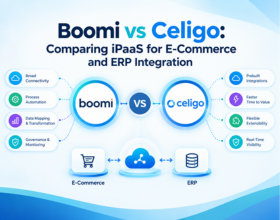
Boomi vs Celigo: Comparing iPaaS for E-Commerce and ERP Integration
Modern e-commerce businesses rarely operate with a single application.
A typical commerce ecosystem may include Shopify, NetSuite, Salesforce, marketplaces, payment platforms, 3PL providers, warehouses, customer service applications, and marketing tools.
Keeping these systems synchronized is critical.
When integrations are handled manually or through multiple disconnected scripts, businesses can experience duplicate data, delayed orders, inaccurate inventory, fulfillment issues, and additional operational work.
This is where an Integration Platform as a Service (iPaaS) can help.
Two platforms businesses may consider are Boomi and Celigo.
Both can connect applications, automate workflows, transform data, and support enterprise integration. However, their strengths and typical implementation approaches can differ—especially when the focus is e-commerce and ERP integration.
So the question isn't simply:
“Which platform is better?”
The better question is:
“Which platform is the right fit for our e-commerce, ERP, and integration requirements?”
1. What Are Boomi and Celigo?
Boomi is a broad integration and automation platform designed to connect applications, data, APIs, and business processes.
Its connector ecosystem can be used to connect applications such as Salesforce and NetSuite, and Boomi also provides connectors for e-commerce applications such as Shopify.
Celigo is an iPaaS with a strong focus on business-process automation and application integration, with particularly extensive capabilities around NetSuite and e-commerce ecosystems.
Celigo offers prebuilt integration applications and templates for systems such as Shopify, NetSuite, Salesforce, Amazon, and other business applications.
For an e-commerce business, this difference in emphasis can be important when evaluating the two platforms.
2. Boomi vs Celigo: Quick Comparison
| Evaluation Area | Boomi | Celigo |
|---|---|---|
| Primary Strength | Broad application, data, API, and process integration | Business-process automation and application integration |
| E-Commerce Integration | Strong | Strong |
| ERP Integration | Strong | Particularly strong for NetSuite ecosystems |
| Shopify Integration | Supported through connector | Strong prebuilt Shopify integration capabilities |
| NetSuite Integration | Supported through connector | Extensive NetSuite-focused integrations |
| Prebuilt Integrations | Broad connector ecosystem | Strong library of prebuilt integration apps/templates |
| Customization | Strong | Strong |
| Developer Experience | Integration-focused | Designed for both technical and business-oriented users |
| Complex Enterprise Integration | Strong | Strong |
| E-Commerce Process Automation | Strong | Particularly strong |
| Best Fit | Broad and diverse integration landscapes | E-commerce, NetSuite, and business-process automation scenarios |
This is a high-level comparison. The right choice depends on your application landscape, integration complexity, team capabilities, and long-term roadmap.
3. E-Commerce Integration: Why the Platform Choice Matters
E-commerce integration is more than simply transferring orders from a storefront to an ERP.
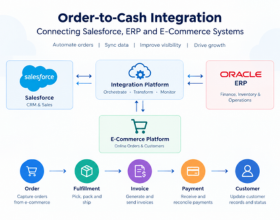
A complete commerce workflow may look like:
Shopify → ERP → Warehouse → 3PL → Customer
At the same time, information may need to move in the opposite direction:
ERP → Shopify
for products, inventory, pricing, fulfillment, and billing information.
A typical integration may involve:
- Orders
- Customers
- Products
- Inventory
- Fulfillment
- Shipping
- Tracking
- Refunds
- Cancellations
- Payments
- Returns
- Product updates
- Pricing
- Tax Information
The more applications and business processes involved, the more important the integration platform becomes.
4. Boomi for E-Commerce and ERP Integration
Boomi provides connectors that allow businesses to connect applications and data sources within integration processes.
For example, its Shopify connector supports actions such as creating, querying, updating, and retrieving Shopify objects. Boomi also provides a NetSuite connector for working with NetSuite data and integrating NetSuite with other applications.
Boomi also offers a dedicated NetSuite–Shopify solution that supports synchronization of areas such as orders, inventory, products, and payments.
Common Boomi E-Commerce Use Cases
- Shopify → NetSuite
- Shopify → Salesforce
- NetSuite → Shopify
- E-commerce → ERP
- ERP → 3PL
- Marketplace → ERP
- Customer synchronization
- Product synchronization
- Inventory synchronization
- Order synchronization
- Payment and fulfillment workflows
Boomi can therefore be a strong option when e-commerce integration is part of a broader enterprise integration architecture.
5. Celigo for E-Commerce and ERP Integration
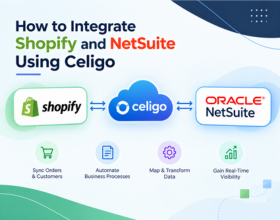
Celigo has a particularly strong focus on e-commerce and NetSuite integration.
Its Shopify–NetSuite integration capabilities support workflows involving orders, customers, fulfillment, inventory, billing, cancellations, refunds, and other order-to-cash processes.
Celigo's current Shopify–NetSuite documentation also describes real-time order and customer synchronization between Shopify and NetSuite.
Common Celigo E-Commerce Use Cases
- Shopify → NetSuite
- NetSuite → Shopify
- Shopify → 3PL
- NetSuite → 3PL
- Amazon → NetSuite
- E-commerce → ERP
- Inventory synchronization
- Order synchronization
- Fulfillment synchronization
- Refund synchronization
- Cancellation synchronization
- Customer synchronization
This makes Celigo particularly relevant for businesses whose integration strategy is heavily centered around e-commerce and NetSuite.
6. Shopify and NetSuite: Boomi vs Celigo
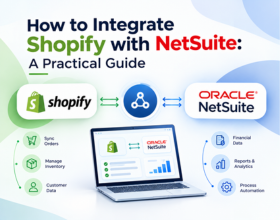
For Shopify and NetSuite specifically, both platforms can support the integration.
Boomi's Shopify connector can integrate Shopify with an ERP such as NetSuite, including synchronization of product catalog and order information.
Celigo provides dedicated Shopify–NetSuite integration applications and templates designed around common commerce workflows. These include order, customer, item, inventory, fulfillment, billing, refund, and cancellation flows.
| Requirement | Boomi | Celigo |
|---|---|---|
| Shopify connectivity | Yes | Yes |
| NetSuite connectivity | Yes | Yes |
| Shopify orders → NetSuite | Yes | Yes |
| NetSuite inventory → Shopify | Yes | Yes |
| Fulfillment synchronization | Yes | Yes |
| Customer synchronization | Yes | Yes |
| Refund/cancellation workflows | Can be built | Prebuilt flows available |
| Custom business logic | Strong | Strong |
| Prebuilt Shopify–NetSuite workflows | Available solutions | Strong dedicated offering |
The key difference is not whether the platforms can connect Shopify and NetSuite. Both can.
The more important question is how much of your specific business process is already available through prebuilt capabilities versus how much needs to be designed and maintained.
7. Prebuilt Integrations vs Custom Development
One of the biggest factors to consider when comparing Boomi and Celigo is how much development your project requires.
A prebuilt integration can reduce implementation effort when your business process closely matches the supported template.
Celigo provides prebuilt integrations and templates for applications such as Shopify and NetSuite, with documented flows for common commerce processes.
Boomi provides a broad connector ecosystem and also offers prebuilt solutions for specific integration scenarios, including NetSuite and Shopify.
The more closely your business process matches a prebuilt integration, the less custom development you may need.
8. Customization and Complex Workflows
Prebuilt integrations are useful, but not every business follows a standard process.
For example, an e-commerce company may have:
- Multiple Shopify stores
- Multiple NetSuite subsidiaries
- Custom pricing rules
- Special fulfillment logic
- Multiple warehouses
- Custom product structures
- Complex tax requirements
- Marketplace orders
- Unique return processes
- Custom customer segmentation
In these scenarios, the ability to customize workflows becomes critical.
| Requirement | Boomi | Celigo |
|---|---|---|
| Standard integrations | Strong | Strong |
| Custom field mapping | Strong | Strong |
| Custom transformations | Strong | Strong |
| Complex business logic | Strong | Strong |
| Custom APIs | Strong | Strong |
| Multi-system orchestration | Strong | Strong |
| Specialized e-commerce workflows | Strong | Particularly relevant |
The platform should be evaluated against your actual process, not simply the number of features listed by the vendor.
9. Developer and Business User Experience
The people who build and maintain integrations are just as important as the platform itself.
Consider who will manage the integration after implementation.
Your team may include:
- Integration developers
- IT administrators
- ERP administrators
- E-commerce managers
- Business analysts
- Operations teams
Celigo emphasizes an intuitive platform that can be used by both technical teams and business leaders, while still supporting custom use cases.
Boomi provides a broad integration environment with connectors, processes, mappings, and other integration components designed for building application and data integrations.
The right choice depends on your team's technical skills and how much responsibility you want business users to have for day-to-day integration management.
10. Monitoring and Error Management
E-commerce integrations operate continuously.
A single failure can potentially affect an order, fulfillment, inventory update, or customer record.
Your integration platform should therefore provide visibility into:
- Successful transactions
- Failed transactions
- Data errors
- API errors
- Authentication failures
- Mapping problems
- Retry activity
- Processing time
- Integration volume
- Business exceptions
Celigo highlights integration monitoring, error management, data mapping, and real-time alerts within its platform.
Boomi also provides integration monitoring and management capabilities as part of its integration platform.
11. Scalability for Growing E-Commerce Businesses
An integration that works for 500 orders per month may need a very different architecture when the business reaches 50,000 or 500,000 orders.
Think about future growth.
- Number of orders
- Number of Shopify stores
- Number of marketplaces
- Number of SKUs
- Number of warehouses
- Number of 3PL providers
- Number of ERP systems
- Transaction frequency
- Data volume
- Geographic expansion
Celigo's Shopify–NetSuite offering specifically positions itself for high-volume commerce scenarios, while Boomi also provides enterprise integration capabilities for broader application landscapes.
Your evaluation should focus on your expected architecture rather than today's transaction volume alone.
12. Boomi vs Celigo: Which Is Better for NetSuite?
If NetSuite is at the center of your integration architecture, Celigo deserves particular consideration because of its extensive NetSuite integration focus.
Celigo describes itself as a major NetSuite integration provider and offers prebuilt NetSuite integrations across areas including e-commerce, finance, supply chain, EDI, and other business processes.
Boomi also provides a NetSuite connector that supports operations such as insert, retrieve, lookup, delete, and update, and can connect NetSuite with applications such as Salesforce and SAP.
If your integration roadmap is heavily centered around NetSuite and e-commerce, evaluate the depth of the prebuilt NetSuite workflows—not just basic connector availability.
13. Boomi vs Celigo: Which Is Better for Shopify?
Both platforms support Shopify integration.
Boomi's Shopify connector supports common operations against Shopify objects such as customers, orders, fulfillments, and locations.
Celigo provides dedicated Shopify–NetSuite flows and templates covering common e-commerce processes such as orders, customers, inventory, fulfillment, billing, refunds, and cancellations.
Therefore, Shopify connectivity alone should not determine the decision.
Instead, evaluate:
- Required Shopify objects
- API requirements
- Number of stores
- Order volume
- Inventory model
- Fulfillment model
- Returns process
- Refund process
- Marketplace requirements
- ERP integration requirements
- Custom business rules
14. Total Cost of Ownership
License or subscription price is only one part of the cost.
Consider:
- Platform cost
- Implementation cost
- Development effort
- Prebuilt integration availability
- Customization
- Training
- Monitoring
- Support
- Maintenance
- Future integrations
- Scaling costs
A platform with a lower initial cost may require more custom development.
Similarly, a platform with more prebuilt functionality may reduce implementation effort for standard processes but may require additional evaluation when highly customized workflows are needed.
Compare the total five-year cost of running your integration ecosystem—not just the initial platform price.
15. When Should You Consider Boomi?
Boomi may be worth considering when your organization needs a broad integration platform across many applications and business processes.
- Multiple enterprise applications
- CRM and ERP integration
- E-commerce integration
- API integration
- Data integration
- Hybrid integration
- Legacy system connectivity
- Complex workflows
- Broad connector requirements
- Enterprise-wide integration strategy
Boomi can be especially relevant when e-commerce is only one component of a much larger integration landscape.
16. When Should You Consider Celigo?
Celigo may be particularly attractive when e-commerce and ERP automation are central to your integration strategy.
- Shopify and NetSuite are core systems
- E-commerce is a major business channel
- You need common commerce workflows quickly
- Order-to-cash automation is a priority
- Inventory synchronization is critical
- Multiple e-commerce applications need to connect
- Business teams need greater visibility into integrations
- You want to leverage prebuilt integration apps and templates
Celigo's current NetSuite integration portfolio includes e-commerce, supply chain, finance, EDI, and other workflows.
17. Simple Decision Framework
| Your Requirement | Platform to Evaluate |
|---|---|
| Shopify + NetSuite-focused business | Celigo |
| E-commerce order-to-cash automation | Celigo |
| Large NetSuite integration roadmap | Celigo |
| Broad enterprise application integration | Boomi |
| Multiple ERP and CRM systems | Boomi |
| Complex enterprise integration architecture | Boomi |
| API and application integration across many systems | Boomi |
| Standard Shopify–NetSuite processes | Evaluate both |
| Highly customized integration requirements | Evaluate both |
| Enterprise-wide integration strategy | Evaluate both |
This is a starting point—not a universal ranking.
18. Run a Proof of Concept Before Choosing
The best way to compare Boomi and Celigo is to test both against the same real-world business process.
For example:
Shopify → ERP → 3PL → Shopify
Test:
- Order creation
- Customer creation
- Product lookup
- Inventory synchronization
- Fulfillment
- Tracking updates
- Refunds
- Cancellations
- Error handling
- Retry processing
- Monitoring
- Data mapping
- Performance
Then compare:
Development effort + operational effort + business-user experience + long-term maintenance
A practical POC can provide more useful information than a feature-by-feature comparison.
19. Questions to Ask Before Selecting an iPaaS
- Which applications do we need to integrate?
- Is NetSuite our primary ERP?
- Is Shopify our primary commerce platform?
- How many stores do we operate?
- What is our order volume?
- Which workflows can use prebuilt integrations?
- How much customization do we require?
- Who will maintain the integrations?
- What APIs do our applications expose?
- What are our security requirements?
- How will we monitor failures?
- What will our integration landscape look like in three to five years?
The answers should drive the platform decision.
The Bottom Line
Boomi and Celigo can both be strong iPaaS choices for e-commerce and ERP integration, but their strengths may align with different business priorities.
Boomi is a strong candidate for organizations looking for a broad integration platform across applications, data, APIs, and business processes.
Celigo can be particularly compelling for businesses where e-commerce, NetSuite, and business-process automation are at the center of the integration strategy, especially when prebuilt commerce workflows can accelerate implementation.
The right decision depends on:
- Your application ecosystem
- E-commerce platforms
- ERP systems
- Integration complexity
- Prebuilt integration requirements
- Customization needs
- Transaction volumes
- Developer skills
- Business-user involvement
- Monitoring requirements
- Budget
- Long-term integration roadmap
Don't choose an iPaaS simply because it has more features. Choose the platform that makes your most important business processes easier to integrate, operate, and scale.
Need Help Choosing Between Boomi and Celigo?
Choosing between Boomi and Celigo can be difficult when your business depends on Shopify, NetSuite, Salesforce, 3PLs, marketplaces, payment systems, and other applications.
Integratt helps businesses evaluate integration requirements, design scalable integration architectures, and implement solutions across leading iPaaS platforms.
Our team can help with:
- Boomi integration
- Celigo integration
- Shopify integration
- NetSuite integration
- E-commerce automation
- ERP integration
- CRM integration
- 3PL integration
- API integration
- Integration monitoring
- Managed integration services
Whether you are building your first Shopify–ERP integration or expanding an existing e-commerce integration ecosystem, the right architecture can reduce manual work, improve data accuracy, and support business growth.
Before selecting Boomi or Celigo, map your complete e-commerce workflow—from customer checkout to ERP, inventory, fulfillment, shipping, returns, refunds, and finance. Then evaluate which platform can automate that workflow with the least unnecessary complexity.
Ready to modernize your integration stack?
Our certified integration architects can help you design, build, and scale reliable connections across your business systems. Book a free consultation to get started.